The Great Migration doesn’t run on a fixed calendar, and any itinerary that promises you a river crossing on a specific date is guessing. What we can tell you, based on patterns that hold reasonably well year to year, is where the herds tend to be in a given month and what that means for planning a trip around them.
The basic loop
Around 1.5 to 2 million wildebeest, along with hundreds of thousands of zebra and gazelle, move in a rough clockwise circuit through the Serengeti-Mara ecosystem, chasing rainfall and fresh grazing. It’s not a single event but a year-long cycle: calving in the southern Serengeti, a push north through the western corridor, crossings of the Grumeti and later the Mara River, months spent in the Maasai Mara, then the long return south. Where “the migration” is at any given time depends entirely on when you’re asking.
Month by month, roughly
January to March: calving season in the south
The herds gather on the short-grass plains of the southern Serengeti, around Ndutu, for calving season. Half a million calves are born within a few weeks, which draws predators in close and makes for extraordinary, if occasionally brutal, game viewing. This is an underrated time to visit: fewer crowds than the river-crossing months, dramatic action, and good weather.
April to May: the long rains, and the quiet
The herds start drifting northwest as the long rains set in. Roads get muddy, some camps close, and this is the cheapest time to travel if you don’t mind grey skies and occasional downpours. Game viewing is still good, it’s just wetter and greener.
June to July: the western corridor and Grumeti crossings
By June the herds are moving through the western Serengeti, and the first river crossings, at the Grumeti, start happening, with crocodiles waiting. This period gets less attention than the Mara crossings but can be just as dramatic, with far fewer vehicles around.
August to October: Mara River crossings
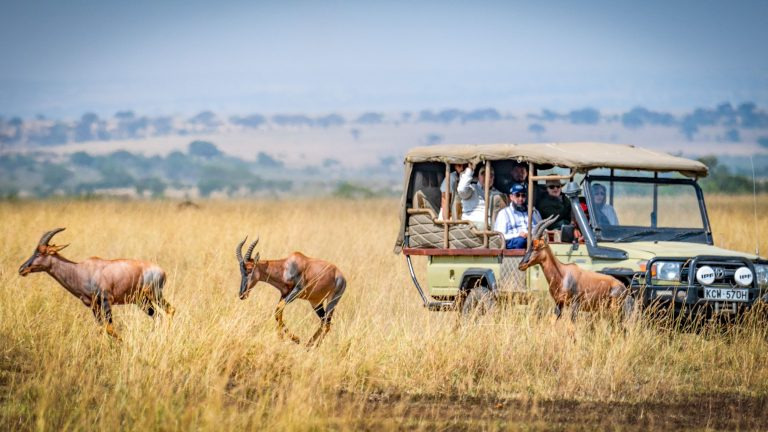
This is the window most people picture when they think of “the migration”: herds bunching up on the riverbank, hesitating, then a sudden, chaotic crossing of the Mara River while crocodiles wait below. It’s also the busiest and most expensive time to visit the Mara, and crossings are unpredictable, you could wait three days at a crossing point and see nothing, or get lucky on your first morning. Basing yourself in a conservancy with a guide who tracks herd movement daily improves your odds considerably.
November to December: the short rains and the journey south
The herds begin drifting back south into the Serengeti as the short rains arrive, timed to reach the southern plains before calving season starts again. This is a quieter, greener period with good value and pleasant weather, though the migration itself is more dispersed and less concentrated at any one point.
What actually determines a good sighting
Rainfall, not the calendar, drives all of this. A dry year can push crossings earlier or later than the “typical” window by several weeks. If seeing a crossing is genuinely the priority for your trip, plan for at least three or four days in the Mara during the August-to-October window rather than one or two, and choose a camp or guide known for actively tracking the herds, some do this far better than others. Our friends at Safari Advice go into more detail on how to time a crossing.
If a crossing isn’t the main goal
It’s worth saying plainly: you don’t need to see a river crossing to have a great migration-season trip, or even a great Mara trip at any time of year. Resident wildlife, the lion prides, elephant herds, and cheetahs that live in the Mara and Serengeti year-round, is reliably excellent regardless of where the wildebeest happen to be. If your dates are fixed for other reasons, work with the season you’ve got rather than chasing a crossing you can’t guarantee.
Planning around the migration
We build migration-season itineraries around actual herd reports from camps on the ground, not just the general calendar, and we’ll tell you honestly if your travel dates line up better with calving season or the river crossings. Get in touch and we’ll help you time it right.