Two decisions shape your safari experience more than almost anything else on the itinerary: what kind of vehicle you’re riding in, and what kind of camp you’re sleeping in. Neither gets as much attention during planning as the parks themselves, but both change the day-to-day feel of the trip substantially.
Safari vehicles: what the differences actually mean
Shared vs private vehicles
Shared vehicles, typically minivans or 4x4s seating six to eight guests, split from other travellers on your itinerary, are the more affordable standard option and work well if you’re comfortable with a fixed group pace and shared decision-making about how long to linger at a sighting. Private vehicles cost more but give you full control: stop as long as you like, skip a sighting that doesn’t interest you, adjust the day’s route on the fly. For photographers, families with young children, or anyone with mobility considerations, private vehicles are usually worth the extra cost.
Pop-top vs open-sided
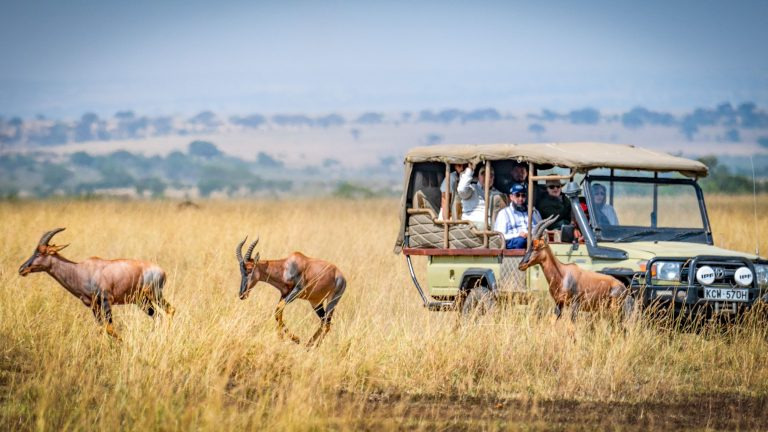
Closed 4x4s with a pop-up roof hatch are the most common vehicle in Kenya and Tanzania’s national parks, practical, weatherproof, and standard-issue at most lodges. In private conservancies, you’ll more often find fully open-sided vehicles, no windows, sometimes no roof at all, which give a noticeably better view and photo angle but expose you fully to dust, sun, and cooler morning air. Neither is objectively better; it depends on where your itinerary actually takes you, since reserves like the Mara require closed vehicles while conservancies typically use open ones.
Why vehicle count per sighting matters
National reserves like the Mara can get busy at a popular sighting, sometimes a dozen vehicles around a single leopard. Private conservancies enforce a strict cap, often no more than five vehicles at any sighting, which changes the whole feel of a game drive even when the wildlife itself is identical.
Camp styles: what you’re actually choosing between
Permanent lodges
Fixed structures with solid walls, full plumbing, and generally the most infrastructure, reliable power, larger pools, sometimes spa facilities. Good for travellers who want dependable comfort over atmosphere, and often more budget-friendly at a given comfort tier than an equivalent luxury tented camp.
Luxury tented camps
Canvas structures on raised platforms with real beds, en-suite bathrooms, and often surprisingly high-end finishes, four-poster beds, freestanding bathtubs, private decks. The canvas walls mean you genuinely hear the bush at night, and many sit unfenced within reserves or conservancies, which is part of the appeal for travellers wanting to feel closer to the wilderness without sacrificing comfort.
Mobile and seasonal camps
Camps that physically relocate to follow the migration or seasonal game patterns, offering some of the most immersive, close-to-the-action stays available, generally at the cost of more basic facilities than a permanent luxury camp. These suit travellers whose priority is proximity to the migration itself over creature comforts.
Owner-run and small-footprint camps
Camps with six to twelve tents or rooms, often family- or owner-operated, tend to offer a more personal, flexible experience, guides who know you by the second day, meals adjusted to your preferences, itineraries that can shift with the weather or a good sighting nearby. Larger lodges, thirty or more rooms, offer more amenities but inevitably a more standardised experience.
Matching vehicle and camp to your priorities
A photographer chasing the best light and angles wants a private, open-sided vehicle and a small conservancy camp with flexible drive times. A family with young kids wants a private closed vehicle for comfort and a lodge with a pool and kids’ programme. A couple on a honeymoon might prioritise an unfenced luxury tented camp over vehicle type entirely. There’s no universally “best” combination, only the one that fits what you actually want from the days in between game drives.
Let us match it to your trip
We ask about your priorities, photography, family comfort, romance, budget, before we ever suggest a specific camp or vehicle setup, because the “best” safari style genuinely differs from one traveller to the next. Tell us what matters most to you and we’ll build the trip around it rather than a generic package.